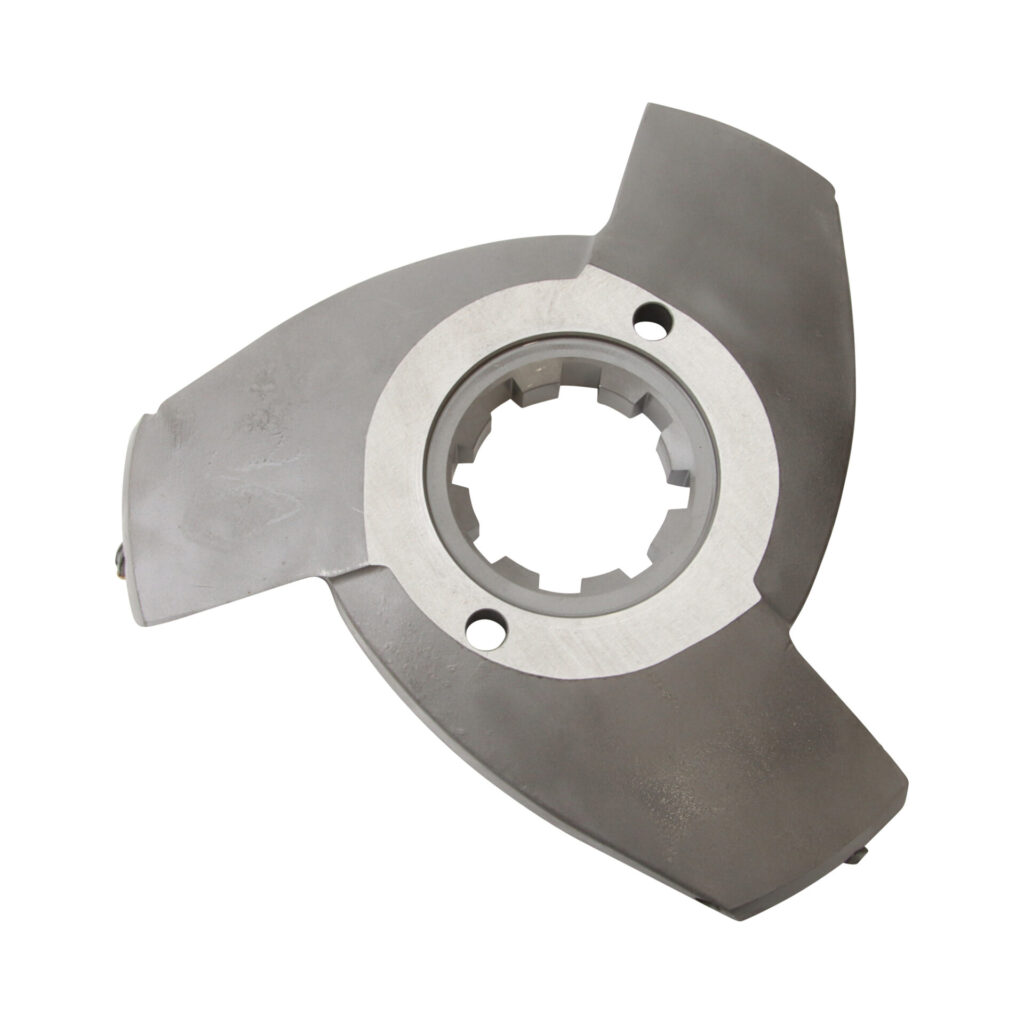
Industrial blade sharpening service for consistent cutting quality
By sharpening industrial knives and cutting blades, Wensing not only restores their sharpness but, above all, ensures a consistently high level of quality. We sharpen with precision using state-of-the-art machinery and guarantee that the desired sharpness is achieved at carefully calibrated sharpening angles.
With our industrial blade sharpening service, Wensing ensures consistency in your production process, which for food producers means predictable product quality and a cut that aligns perfectly with the rest of the production line.
Precise inspection before and after sharpening
Before industrial knives are sharpened, our specialists analyse the surface, the cutting angle, micro-damage and wear patterns. This enables us to determine precisely which corrections are required. Examples include restoring geometry and radius or correcting asymmetrical wear. As industrial knife sharpeners, we assess every knife with the same precision and, after sharpening, check once again that all tolerances and cutting angles fall within the desired margins. This process ensures that deviations do not affect machine load or product specifications.
Industrial knife sharpening service
In the food industry, every step in the process must be verifiable, including when it comes to machine blades. Wensing therefore maintains clear documentation of quality controls. This applies not only to existing blades, but also to new blades. Quality controls include the verification of cutting angles, tolerances, inspection results and any damage identified. This makes it easy for you to comply with audits, ensure traceability and prevent risks in hygiene and safety processes. Thanks to this level of transparency, our sharpening service fits perfectly within modern QA and QC guidelines.
Better blade restoration through the correct sharpening angle
For a reliable cutting process, it is essential that every industrial knife sharpening service session delivers the correct cutting angle. Even minor deviations can lead to increased machine load or undesirable product variations. Increased machine load often results in extra wear or a higher risk of downtime and blade breakage. A product deviation can lead to a shelf-life or discolouration problem and lower yield due to, for example, weight deviations.