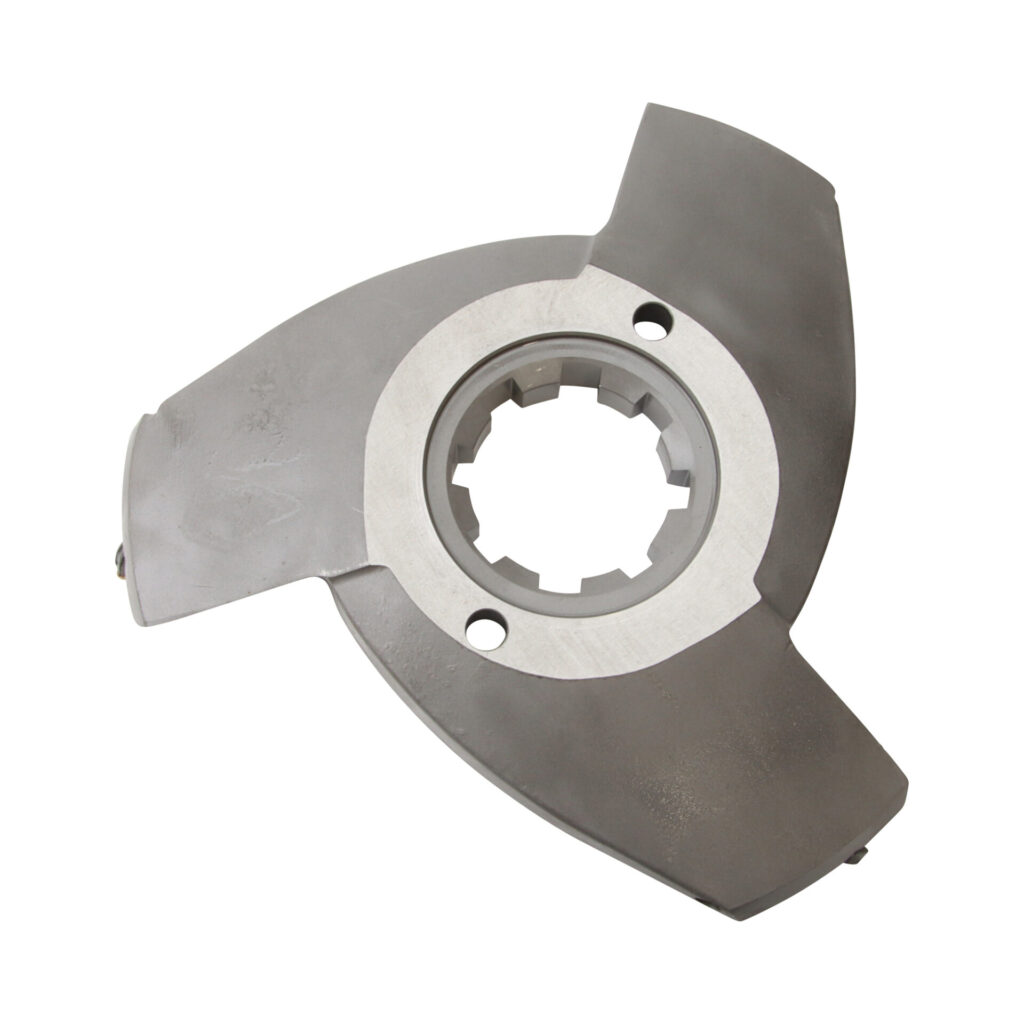
Industrial blade sharpening service for consistent cutting quality

By sharpening industrial knives and cutting blades, Wensing not only restores their sharpness but, above all, ensures a consistently high level of quality. We sharpen with precision using state-of-the-art machinery and guarantee that the desired sharpness is achieved at carefully calibrated sharpening angles.

With our industrial blade sharpening service, Wensing ensures consistency in your production process, which for food producers means predictable product quality and a cut that aligns perfectly with the rest of the production line.

Precise inspection before and after sharpening

Before industrial knives and blades are sharpened, our specialists analyse the surface, the cutting angle, micro-damage and wear patterns. This enables us to determine precisely which corrections are required. Examples include restoring geometry and radius or correcting asymmetrical wear. As industrial knife sharpeners, we assess every knife with the same precision and, after sharpening, check once again that all tolerances and cutting angles fall within the desired margins. This process ensures that deviations do not affect machine load or product specifications.

Industrial knife and blade sharpening service

Industrial knife sharpening service

In the food industry, every step in the process must be verifiable, including when it comes to machine knives and blades. Wensing therefore maintains clear documentation of quality controls. This applies not only to existing blades, but also to new blades. Quality controls include the verification of cutting angles, tolerances, inspection results and any damage identified. This makes it easy for you to comply with audits, ensure traceability and prevent risks in hygiene and safety processes. Thanks to this level of transparency, our sharpening service fits perfectly within modern QA and QC guidelines.

Better blade restoration through the correct sharpening angle

For a reliable cutting process, it is essential that every industrial knife sharpening service session delivers the correct cutting angle. Even minor deviations can lead to increased machine load or undesirable product variations. Increased machine load often results in extra wear or a higher risk of downtime and blade breakage. A product deviation can lead to a shelf-life or discolouration problem and lower yield due to, for example, weight deviations.

Frequently asked questions

Resharpening is usually possible when wear is mainly limited to the cutting edge and the required blade geometry and dimensions can still be restored. Replacement may be necessary when a knife has cracks, severe chipping, deformation or insufficient remaining material. The complete condition of the blade should therefore be assessed, not only its sharpness.

There is no fixed interval for every application. Sharpening frequency depends on the product, production hours, blade material, cutting speed and required cut quality. Deteriorating cutting performance, increased resistance or visible edge wear are useful indicators that sharpening may be required.

Important checks can include the cutting edge, geometry, dimensions and surface condition. Depending on the knife and machine, flatness, run-out or other application-specific tolerances may also be relevant. The objective is to return the knife to a reproducible condition that meets the requirements of the cutting process.

Yes. A sharpening schedule can be based on production volume, knife consumption and the number of knives in rotation. Planned knife changes and sharpening can reduce the risk of unexpected production interruptions and make cutting quality easier to control.

Service life depends on the product, knife material, geometry, machine settings and operating conditions. Professional sharpening aims to restore the correct cutting geometry while removing only the material necessary. A technically sound knife can therefore often be used for multiple sharpening cycles.